Product Description
Our Anti-Settling Agent for Aqueous Systems is a specialized formulation designed to combat settling challenges in water-based formulations. Tailored for compatibility with aqueous systems, this additive ensures the uniform dispersion of pigments and particles, preventing sedimentation and maintaining stable formulations. Ideal for applications in paints, coatings, and adhesives, this anti-settling agent enhances the longevity and quality of aqueous products. Its easy integration into formulations simplifies the manufacturing process, providing consistent and efficient results. Elevate your aqueous formulations with our Anti-Settling Agent, where stability meets excellence, offering a tailored solution for achieving uniform dispersion and preventing settling issues in water-based systems across diverse industries. Say goodbye to settling concerns and welcome a new era of stability with this advanced anti-settling agent for aqueous formulations.
Product details
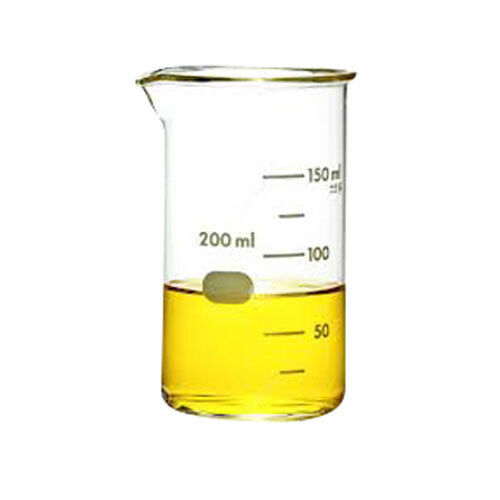
| Appearance | Pale to dark yellow liquid |
| Compatibility | All types of emulsions used as aqueous binders |
| pH of 2%% solution | 7 to 8 |
| Ionic nature | Anionic |
| Dose level | 0.5 to 0.8%% (added at dispersion stage or under agitation at any stage of production) |
Application : Paints
Exceptional Pigment Suspension
This anti-settling agent is engineered to keep pigments uniformly dispersed in water-based systems, eliminating the risk of sedimentation. By maintaining homogeneous dispersions, the agent ensures superior product consistency and surface appearance. Its miscibility with water provides flexibility for use in a range of aqueous coatings and paints, making it an invaluable additive for manufacturers seeking reliable stability.
Versatile and Easy Integration
Suitable for various industrial-grade formulations, the anti-settling agent offers hassle-free incorporation into manufacturing processes. Recommended at a dosage of 0.12%% by weight depending on the formulation, it can be directly mixed into your system. Its moderate viscosity and mild odor further simplify handling and processing, while ensuring minimal impact on the final products physical properties.
FAQs of Anti-settling Agent for Aqueous Systems:
Q: How should the anti-settling agent be integrated into aqueous paint or coating formulations?
A: For optimal performance, blend the anti-settling agent directly into your water-based system during the mixing stage. A recommended dosage is between 0.1%% and 2%% by weight, depending on the specific formulation and level of pigment used. Proper dispersion ensures maximum effectiveness in preventing pigment settling.
Q: What are the primary benefits of using this anti-settling agent in aqueous systems?
A: This agent maintains homogeneous dispersion of pigments, which prevents settling and enhances the overall consistency and appearance of water-based coatings. Its consistent performance contributes to improved product shelf life, reliable application, and higher manufacturing efficiency.
Q: When should this anti-settling additive be added during production?
A: It is best to introduce the anti-settling agent during the primary mixing phase, before or together with pigment addition. Early incorporation ensures thorough dispersion and maximizes anti-settling performance throughout the storage and application of the finished product.
Q: Where is this anti-settling agent most commonly used?
A: It is widely used in the production of water-based paints, industrial coatings, and similar aqueous systems where pigment stability and suspension are critical. Manufacturers in India and worldwide rely on it to enhance their product quality.
Q: What makes this anti-settling agent compatible with most aqueous coatings and paints?
A: Its miscibility with water and neutral pH range (78) enable it to blend seamlessly into various aqueous formulations without negatively affecting color, texture, or chemical stability. The agent is engineered as a universal additive for broad compatibility.
Q: How stable is the anti-settling agent, and under what conditions should it be stored?
A: The product is stable under recommended storage conditions, which include keeping it in airtight containers in a cool, dry environment. It has a shelf life of 12 months, ensuring reliable performance over extended storage periods.





 Send SMS



 Send Inquiry
 Send Inquiry
 Send SMS